Langue

Most dealerships leak profit in one quiet spot: the trade-in lane. Not because the team is lazy or careless, but because trade-ins get treated like a box to check instead of a lever to shape the whole deal. When trade value is just a number on a worksheet, you give up control of structure, gross, and even the customer’s trust.
Late winter and early spring make this even more obvious. Shoppers are sitting at home with tax refunds and summer plans, pricing trucks for towing, RVs for road trips, and boats for the lake. They start online, expecting an instant trade-in value that makes sense with their credit and their budget. When your trade-in appraisal software is not set up right, they get mixed messages and lose confidence fast.
We want to walk through what many automotive, RV, marine, and powersports dealers miss about trade tools, and how linking trade data with a credit-first workflow turns a random website form into a ready-to-desk, deal-strong lead.
Most stores still treat trade-ins like a back-end used car intake step. Someone appraises the unit, books it out, and hands the number to the desk. By that time, you are already fighting to keep the deal together.
When trade data and real credit data work together from the start, everything changes. You can:
• Shape terms around equity
• Match the right lenders earlier
• Set realistic payment ranges without guesswork
Instead of soft assumptions about credit, you can connect trade-in appraisal software to real approval insights. That means the trade value, down payment, and payoff come together with credit profile to give your team a clear path to structure.
A few key pieces of data make all the difference:
• Verified ID, so you know the shopper is real
• True payoff, not a rough estimate
• Equity position, positive or negative, before the customer walks in
With this, you cut down on “phantom equity” that disappears at the store. You set expectations before the test drive, not at the signing desk. You can even segment your leads by trade and equity type. High-equity customers might get quick appointment pushes, while heavy negative-equity customers may get early payment and term coaching. Same lead volume, smarter focus.
The tools themselves are rarely the problem. The way they are set up and used is what hurts profit.
Common bad habits include:
• Letting shoppers choose “excellent” condition by default
• Not asking for enough photos, or not enforcing photo uploads
• Ignoring mileage gaps or accident history until they reach the store
Another quiet loss happens when dealers rely on a single book source or a wide “ballpark” range and never adjust it to local reality. Trade-in appraisal software usually has options to pull in:
• Local market trends
• Seasonality, like higher RV and boat demand before summer
• Your own store’s turn rates and recon habits
When those settings stay generic, values feel random. The desk steps in more often. Customers see one number online, a very different one in-store, and trust falls apart.
Disconnected workflows are also a big issue. The lead submits a trade-in form on your site, but:
• It does not flow cleanly into the CRM
• Sales has to rekey details into the desking tool
• Credit runs in a totally separate system
Every handoff is a chance to lose info or slow down. By the time the shopper visits, no one is sure what was promised online. That is when you hear, “That is not the number I saw.” Even if your team is right, the software setup has already put them in a tough spot.
A trade-in form is often the first real sign that a shopper is serious. They are moving past “just browsing” and asking, “What can I actually afford if I swap my current unit?” Around late winter and into spring, this is especially true as people look ahead to towing, camping, or getting back on the water.
The problem is that many trade-in forms only capture:
• Year, make, model
• Rough mileage
• A guessed-at condition
That gives you a weak lead. You know they are interested, but you do not know if they can qualify or what payment range fits.
When you pair the trade flow with a soft or full credit application, the picture sharpens. The same customer who asks, “What is my car worth?” can become a fully qualified lead with:
• Credit profile
• Budget and target payment range
• Conditional trade-in value tied to real approval potential
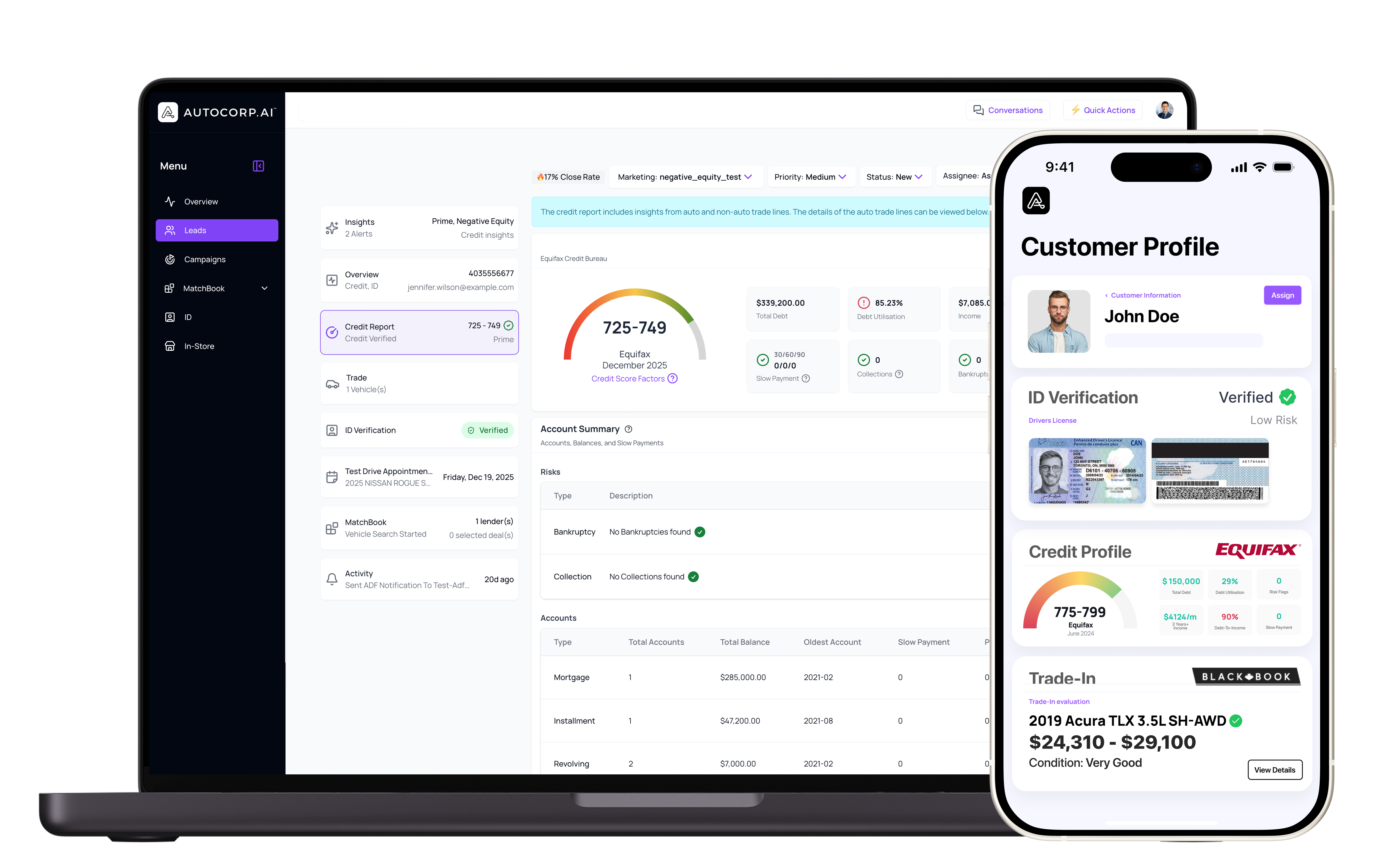
This is the type of experience we focus on at Autocorp.ai. Our style of integrated tools brings trade value, credit data, and ID verification into a single online path. By the time the lead hits your CRM, your BDC and sales team are not guessing. They see equity, payoff, and approval path, and can prioritize follow-up based on real buying power.
Fast, clear, conditional ranges also protect the in-store visit. When the shopper sees their trade value as a range, tied to both condition and credit, they are less shocked by the final number after inspection. That makes it much easier to lock in appointments and test drives without awkward “walk-back” talks.
When trade-in appraisal software feeds structured data into your desking tools, every deal moves faster. No more hunting through emails for photos or scribbled notes on payoffs.
The desk can see, in one place:
• ACV ranges based on your real market
• Estimated recon numbers
• Book-out details and options
• Verified payoff info
With pre-qualified trade leads, your first pencil lands closer to the final structure. You protect front-end by avoiding wild swings in ACV, and you protect back-end by setting finance terms that match lender rules from the start. Less back-and-forth, fewer rewrites, and more time for F&I to present products instead of saving deals.
Trade data also helps with inventory planning. As trades stack up, patterns appear:
• Units that retail fast in your area
• Units that belong at auction
• Trades that can be matched to other leads already in your CRM
Clean, well-supported valuations and clear equity numbers also help with lenders. When your deal shows a fair trade value and realistic advance, it is easier to get quick approvals without heavy rehash. That keeps customers out of the waiting area and in front of the finance manager sooner.
Before spring and summer demand hits full swing, it is worth taking a hard look at how your trade-in appraisal software is set up and how leads move through your store. A short internal audit can reveal big gaps.
Key action steps include:
• Connecting your trade tool directly to credit workflows
• Requiring clear condition standards and photo uploads
• Syncing trade data with CRM and desking tools
• Training staff to use trade information as a conversation starter, not just a number
When trade, credit, ID, and even test drive booking flow together, that anonymous browser on your site can turn into a verified, credit-qualified buyer before they ever touch your lot. At Autocorp.ai, we build everything around this credit-first path so your team sees the whole deal early instead of fixing it late.
So ask yourself: if every trade lead that arrived tomorrow was fully appraised, credit-qualified, and appointment-ready, how many more profitable deals could your team close this season?
Our trade-in appraisal software helps your team make faster, more accurate decisions that protect margins and improve the customer experience. At Autocorp.ai, we give you real-time data and guided workflows so your appraisals are consistent and transparent across the dealership. If you are ready to modernize your trade-in process and reduce guesswork, we are here to help you implement it quickly. Have questions about getting started or integration details? Contact us and we will walk you through the next steps.